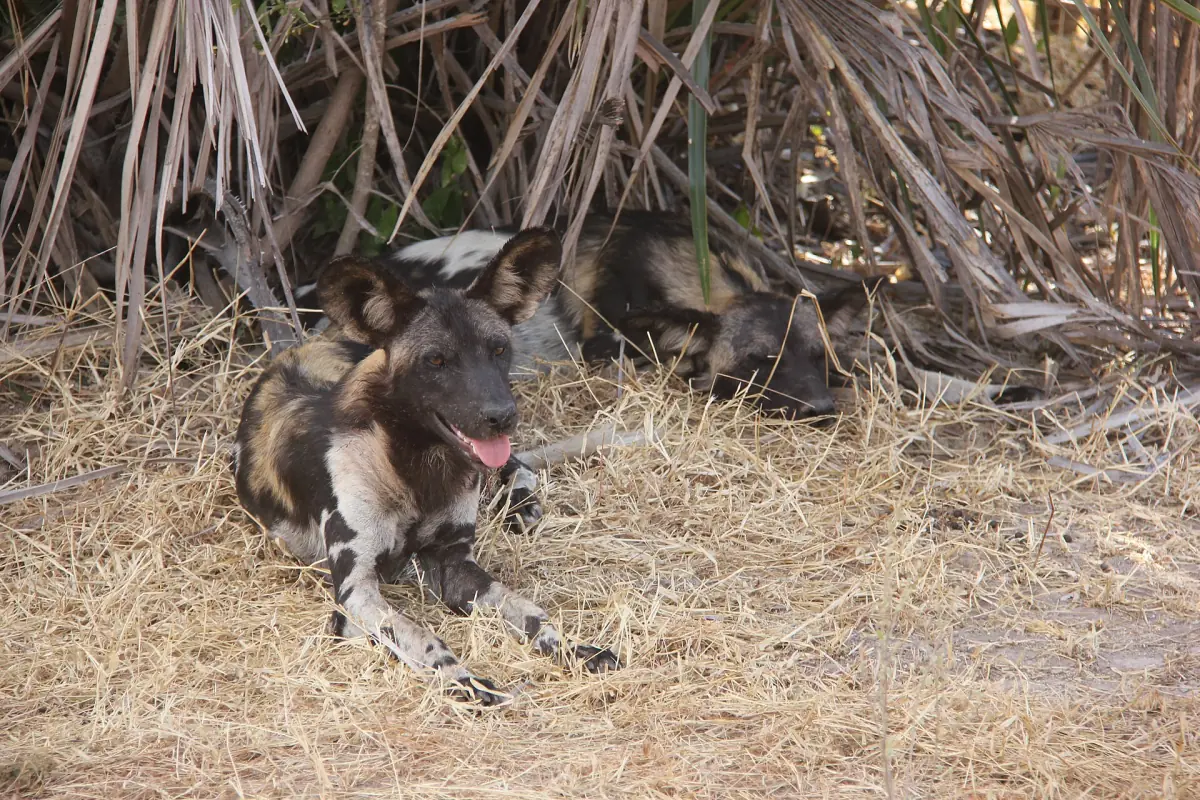
African wild dogs in Nyerere
The African wild dog (Lycaon pictus) lives in close-knit packs and hunts together, mostly antelope and other hoofed animals. The IUCN Canid Specialist Group classes it as Endangered, with a declining population. The Selous and Nyerere area is part of the larger, cross-border Selous-Niassa landscape, which matters for the species.
Wild dogs are never a promise on a safari. Packs cover large areas and are also recorded outside the park. If you want a chance to meet them, plan several game drives in Nyerere rather than a single outing.
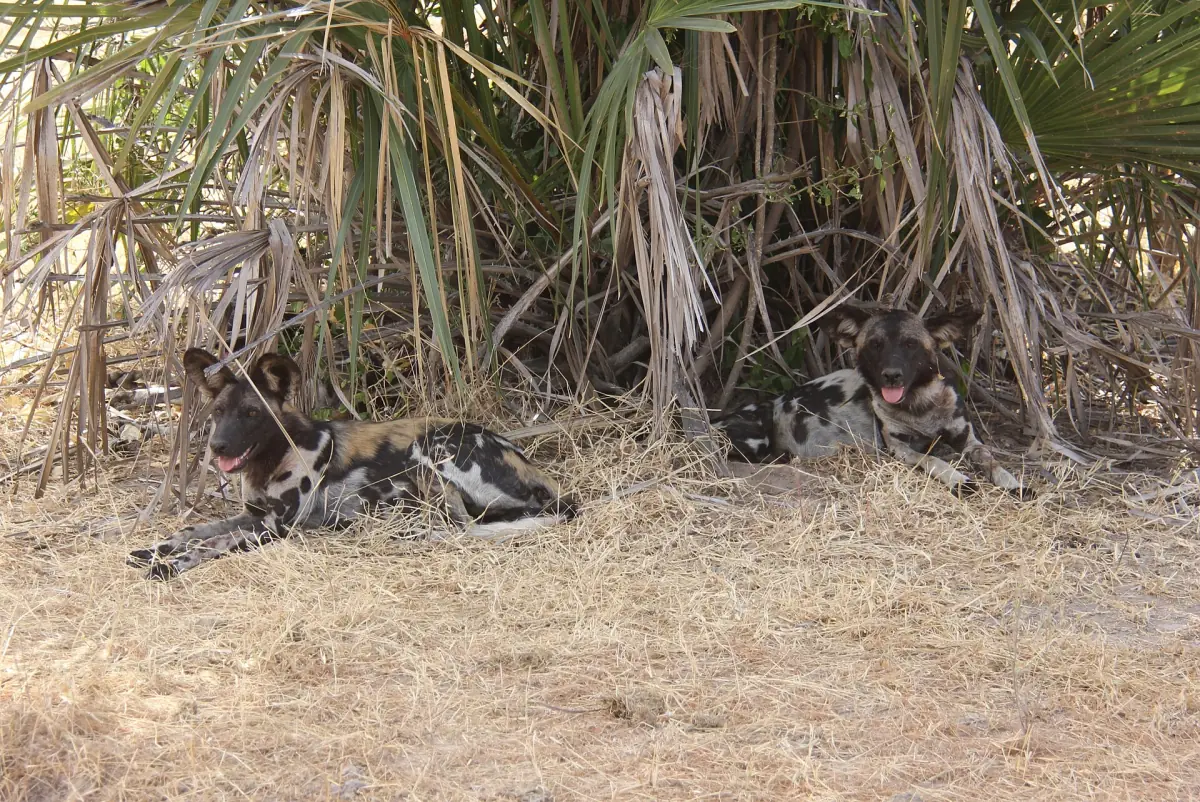
Wild dogs in Tanzania: what the numbers mean
Four figures you will see quoted, and what each one covers.
| Figure | What it covers | Years |
|---|---|---|
| 222 dogs | Individually identified in seven camera-trap surveys across 4,674 km² in the Selous and Nyerere | 2020 to 2022 |
| 2.14 ± 0.45 per 100 km² | Adults and yearlings in a modelled area of 2,565 km² in the Selous Game Reserve, range 1.42 to 3.21 | 2020 to 2022 |
| About 6,600 adults | Worldwide, in 39 subpopulations, an IUCN estimate | 2020 |
| 10 to 11 pups | Average litter size, which is not the size of a pack | – |
None of these is a census of Nyerere National Park, and the density figure comes from the Selous Game Reserve, so do not multiply it by the area of the park. For most readers, the useful takeaway is simple: wild dogs live at low densities, they need huge areas, and the surveys show they are present in this landscape.
Our pick: a three-day safari in the park
Wild dogs live in the park, but no tour can promise a sighting. Two nights and a full-day game drive give you the most time.
Hand-picked tours, booked through GetYourGuide. Prices are indicative starting prices in US dollars (as of October 2026). Tap a tour for live availability and the current price in your currency.

Nyerere safaris and game drives
Game drives, boat trips and fly-in safaris to Nyerere National Park, with live prices and availability.
African wild dog: packs, litters and dens
How the animals live, and what that means for visitors.
Hunting together
Packs hunt as a team and mostly target antelope and other hoofed animals. Their territories are large, so a pack can be far from where it was seen last week.
Litters
The Canid Specialist Group gives an average of 10 to 11 pups per litter. That number says nothing about how many dogs you will meet in one pack. The Mtemere pack had a litter in mid-June 2024, later moved into village areas and returned in November. That is one case, not a calendar for when to visit.
Dens
Active dens are sensitive places. Do not plan a trip around visiting one, and be wary of anyone who offers a fixed den location.
Conservation
The species is Endangered across Africa. The packs in the Selous-Nyerere area are studied with camera traps and field observation, which produced the figures above.
Looking for wild dogs on a safari
Practical rules that apply to every sighting.
Give it time
Good chances come from several drives over a few days, not from a fixed date. There is no reliable month-by-month pattern, so recent news from your guide is worth more than any calendar.
Keep to the tracks
Stay on the permitted tracks, never feed animals and follow the instructions of your guide or ranger. On foot, you need a ranger and a permit, see the walking safari page.
Combine with the river
A boat safari on the Rufiji adds hippos, crocodiles and water birds. Wild dogs live on land, so look for them on the drives.
Why the surveys matter
What camera traps add to the picture.
Many places, many months
The 2020 to 2022 work was not one outing. Seven surveys across 4,674 km² gave researchers a broad picture of which dogs use which areas.
Individual dogs
Camera traps let researchers tell dogs apart, which is how 222 individuals were identified. That is a count of identified animals, not of every dog in the landscape.
Beyond the park boundary
Packs are also recorded outside the park, including in village areas.
Behaviour around wild dogs
Rules that protect the animals and you.
Stay in the vehicle
On a game drive, stay inside the vehicle and follow your guide. On foot, only walk with an authorised ranger.
No feeding, no drones
Never feed animals. Drones need a special permit and should stay at home without one.
Keep calm and quiet
Speak softly and follow your guide's instructions on where to position the vehicle.
More about Nyerere
Other animals, the park and the costs.
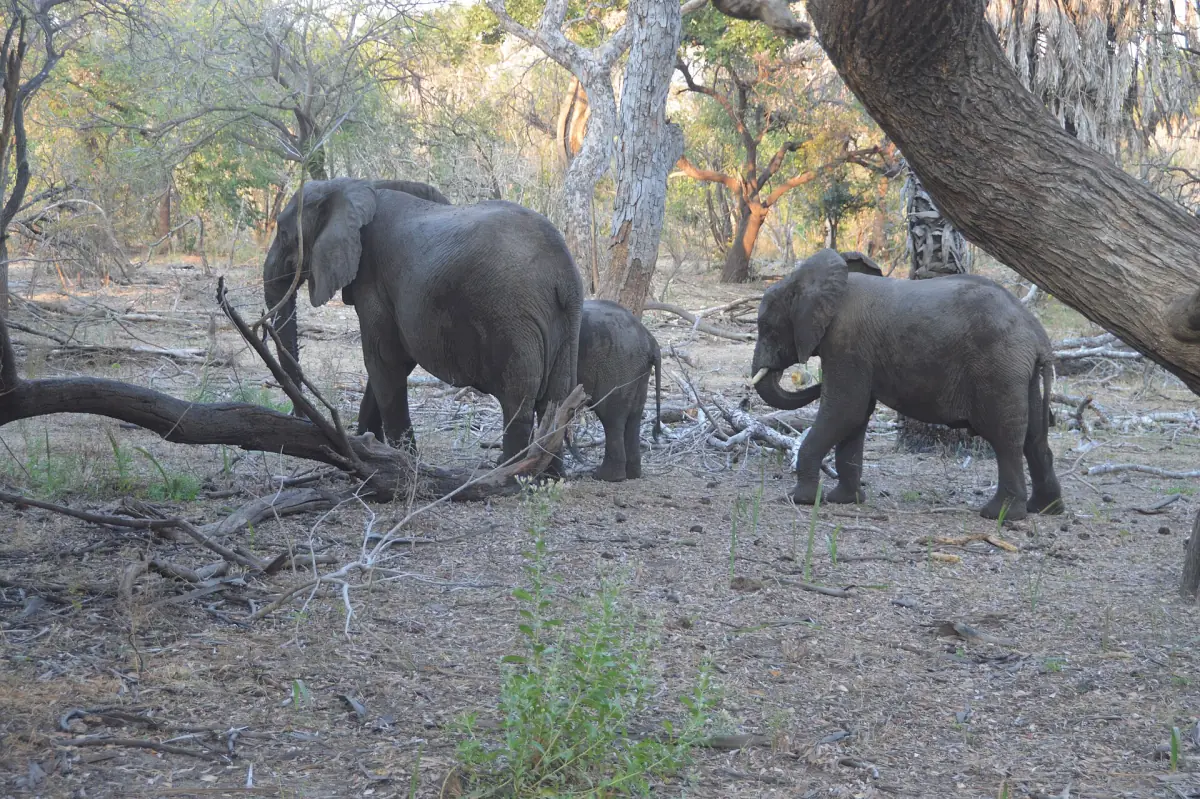
Nyerere wildlife
Elephants, lions, hippos, birds and more.
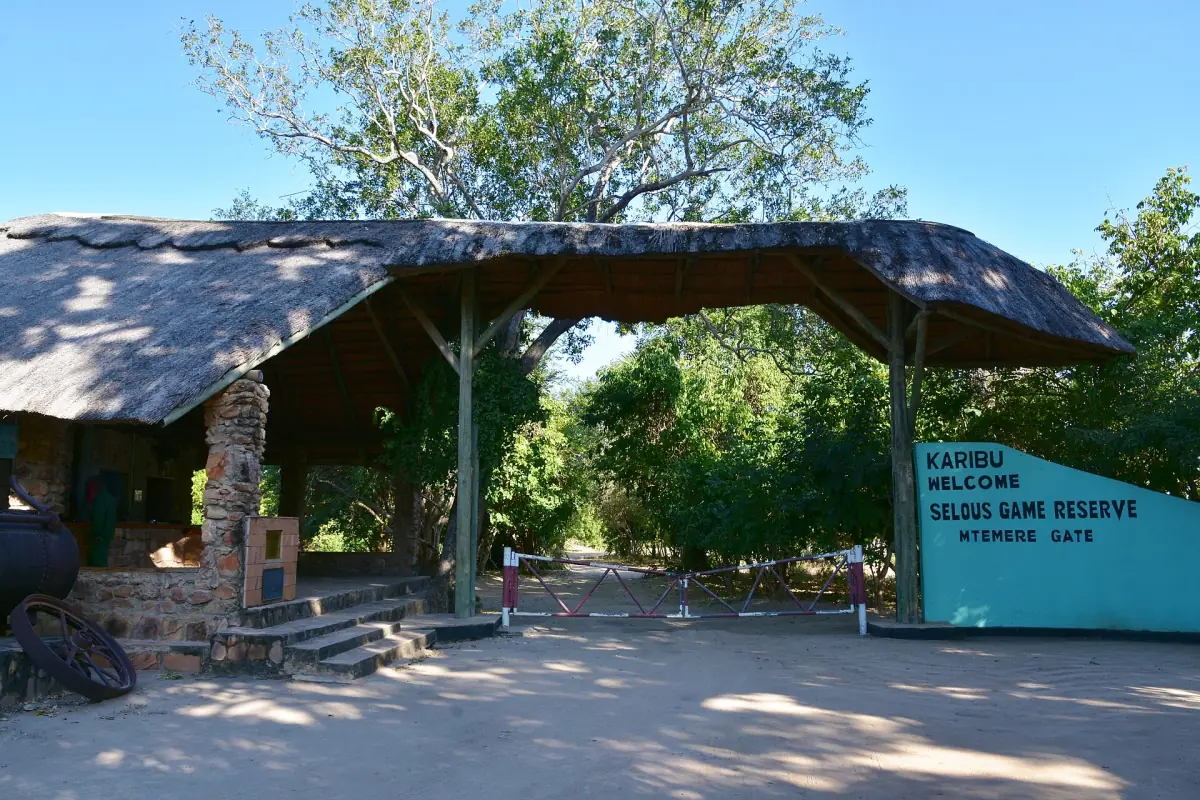
Park fees
Daily fees, vehicle fees and how to pay.
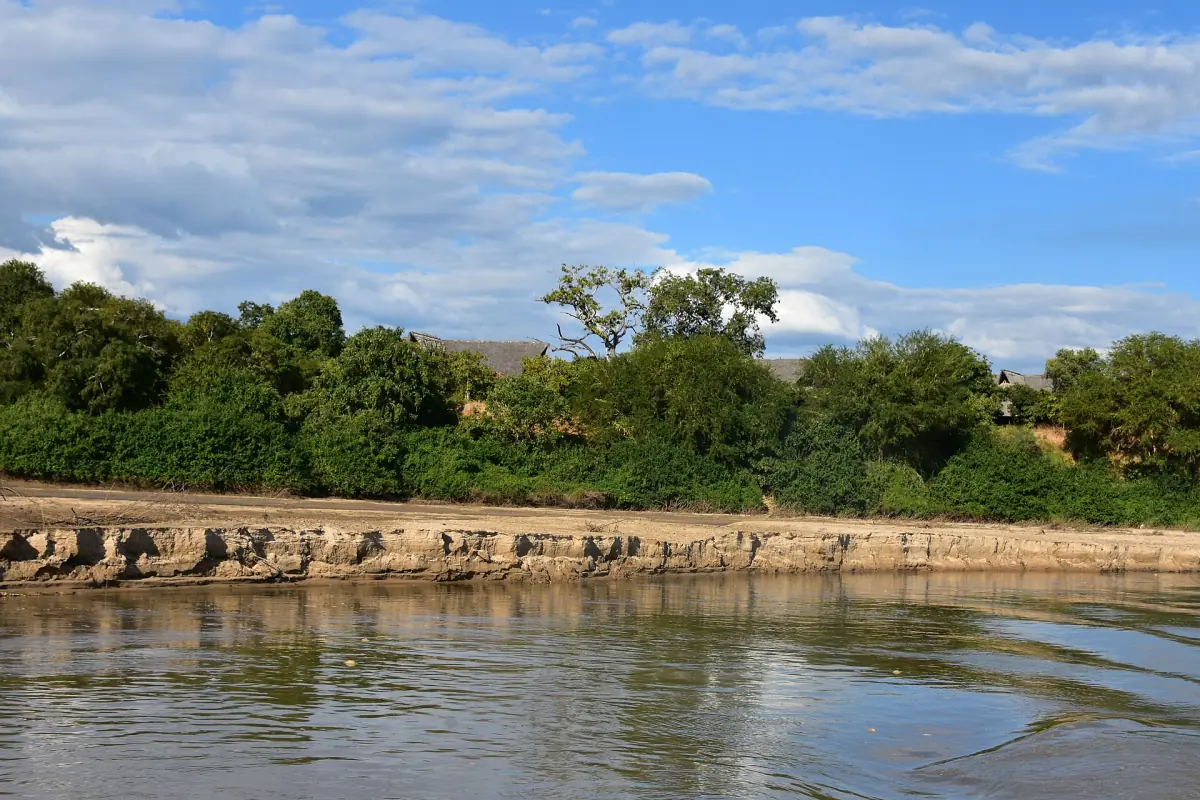
Camps and lodges
Where camps sit along the river and lakes.
Wild dogs are also seen in Tanzania's other southern park, described on the Ruaha wild dogs page. The wider landscape continues into the Niassa corridor.
African wild dogs in Nyerere: frequently asked questions
Are there wild dogs in Nyerere National Park?
Yes. Camera-trap surveys across the Selous and Nyerere from 2020 to 2022 identified 222 individual dogs. Seeing them on a given day is a matter of luck.
How many wild dogs live in Nyerere?
There is no count for the park as a whole. The 222 dogs are the ones identified in the surveyed areas, and the density figure comes from part of the Selous Game Reserve.
When is the best time to see wild dogs?
No month is dependable. Plan several game drives and ask your guide about recent sightings. For the general seasons, see the weather page.
Can I visit a wild dog den?
Do not count on it. Active dens are sensitive places, and a guide should not promise you one.
Are wild dogs endangered?
Yes. The IUCN Canid Specialist Group classes the African wild dog as Endangered, with a declining population.
Do wild dogs live only inside the park?
No. Packs are recorded outside the park too, including in village areas, and the landscape reaches into the wider Selous-Niassa region.